
遠慮せずにメッセージを送ってください

検索
最近の投稿
ニュースレター
Types of Warehouse Racking Systems: Benefits, Comparison & Selection Guide
A distribution center manager planning a new warehouse faces a critical decision: which racking system to install. Install the wrong type and pallets become hard to reach, pick paths grow longer, and floor space gets wasted. Install the right one and storage density, order accuracy, and worker safety all improve at once. The key is not to find a one-size-fits-all solution, but to match the racking design to the specific inventory profile, throughput requirements, and operational workflow of your warehouse.
Understanding Warehouse Racking Systems
A warehouse racking system is a structural framework designed to store pallets, cases, or non-standard loads in an organized manner. The core trade-off every system addresses is between access and density. Selective racking gives immediate access to every pallet but uses more floor space. Compact systems such as drive-in or push-back racking increase storage density but limit access to individual pallets. The decision is essentially about how much selectivity you need at the pallet level.
Before choosing, warehouse operators need to define their SKU count, pallet dimensions, weight capacity, turnover rate, and picking method. These inputs determine whether a static or dynamic system will perform better in daily operations. A well-planned rack layout also improves space utilization by reducing unnecessary aisle space, which directly impacts operational efficiency. For instance, a warehouse handling 5,000 SKUs with rapid product turnover will likely need selective racking, while a facility storing bulk pallets of the same product can benefit more from drive-in or push-back systems.
Key takeaway: The best racking system is not the most advanced one, but the one that matches your SKU count, pallet dimensions, and order picking workflow.
For guidance on improving floor space efficiency, see our article on optimizing warehouse layout to improve space utilization .
Static Racking Systems for Organized Storage
Selective Pallet Racking
Selective pallet racking is the most widely used system in modern warehouses. It provides direct access to every pallet position, making it ideal for operations with a high number of SKUs and frequent order picking. The system consists of upright frames and horizontal beams, with each bay typically holding one or two pallets per level.
The main advantage is flexibility: adjust beam heights, add wire decks, or reconfigure the layout as product lines change. The main limitation is floor space consumption, since aisles must be wide enough for forklifts to maneuver. In warehouses with limited footprint, pairing selective racking with a foldable storage cage can help organize small items and returnable containers without sacrificing pallet access.
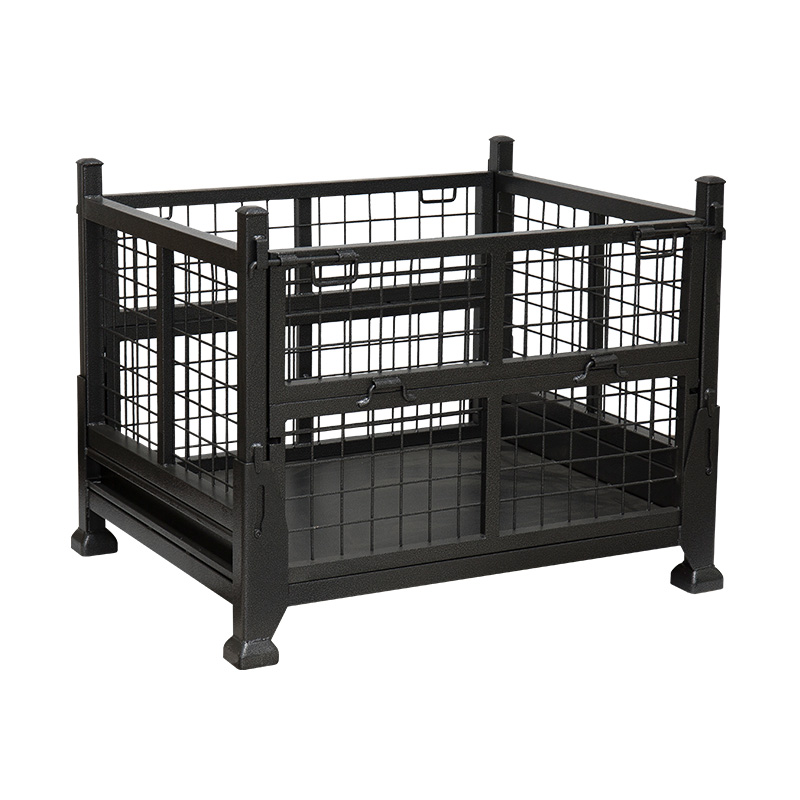 Foldable Pallet Cage for Space-Saving Storage and Logistics This collapsible pallet cage stacks neatly when not in use, supporting efficient turnover and organization. It complements selective racking by securing small loads and returnable containers without occupying extra floor space. View Product →
 Double Deep Pallet Racking
Double deep pallet racking doubles storage density by storing pallets two deep instead of one. Operators use reach trucks or specialized forklifts with double-deep forks to access the back pallet. This configuration works well for medium- to low-rotation SKUs where FIFO is not strictly required. The trade-off is that around 50% of pallet positions are not directly accessible, increasing replenishment planning complexity. The system suits warehouses balancing density and inventory selectivity.
Cantilever Racking
Cantilever racking is designed for long, bulky loads such as pipes, timber, metal profiles, and furniture. Instead of horizontal beams, cantilever arms extend from vertical columns, allowing the rack to hold items that would not fit on conventional pallet racking. The system offers adjustable arm heights and can be single- or double-sided. Warehouses dealing with irregular loads often pair cantilever racking with mobile containers for efficient storage and transfer of oversized items.
Dynamic Racking Systems for High-Throughput Operations
Drive-In and Drive-Through Racking
Drive-in racking uses a continuous channel of pallet rails within a bay. Forklifts drive directly into the bay to place or retrieve pallets, making it a LIFO (last-in, first-out) system. Drive-through racking is a FIFO variant where forklifts load from one side and unload from the other. Both systems deliver high storage density and are suitable for bulk storage of fast-moving or slow-moving inventory. However, the risk of forklift collisions and the need for careful beam inspections are important safety considerations. These systems are best for SKUs with limited variety and stable throughput patterns.
Push-Back Racking
Push-back racking enables stored pallets to sit on inclined rails or rolling carts. When a new pallet is loaded, it pushes the previous pallets back toward the rear of the rack. This allows up to six pallet positions deep while retaining access from a single aisle. Push-back racking provides higher density than selective racking and more selectivity than drive-in racking. It is particularly useful for storing multiple pallets of the same SKU, making it popular in food and consumer goods distribution.
Pallet Flow Racking
Pallet flow racking uses gravity-driven rollers arranged on a slight incline. Pallets enter at the rear and flow forward to the pick face, making it a true FIFO system. This is ideal for time-sensitive products with high turnover, such as perishables or promotional items. The system ensures constant product rotation, reduces travel time, and improves picking accuracy. It is one of the most efficient solutions for high-throughput order fulfillment operations, though it requires careful management of pallet quality and roller performance.
Picking Solutions and Mobile Equipment
Carton Flow Racking
Carton flow racking is a gravity-fed dynamic system for case-picking operations. Cartons or cases are loaded at the rear and slide forward on roller lanes to the pick face, keeping picking positions consistently full and reducing worker travel. This system is often integrated with pick-to-light technology to further improve accuracy. Warehouses with high-volume, split-case picking benefit most from carton flow racking.
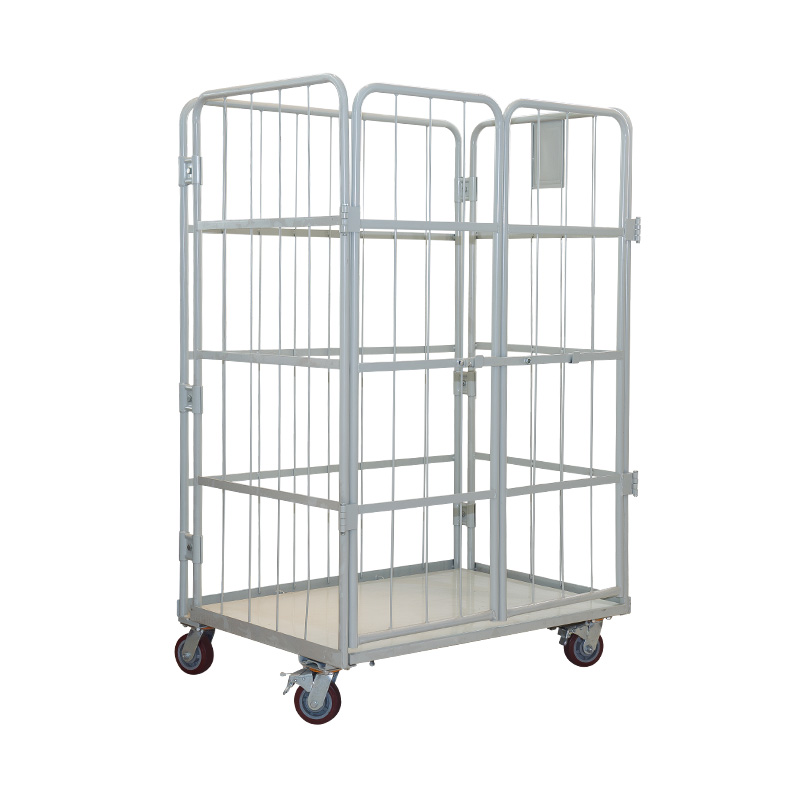
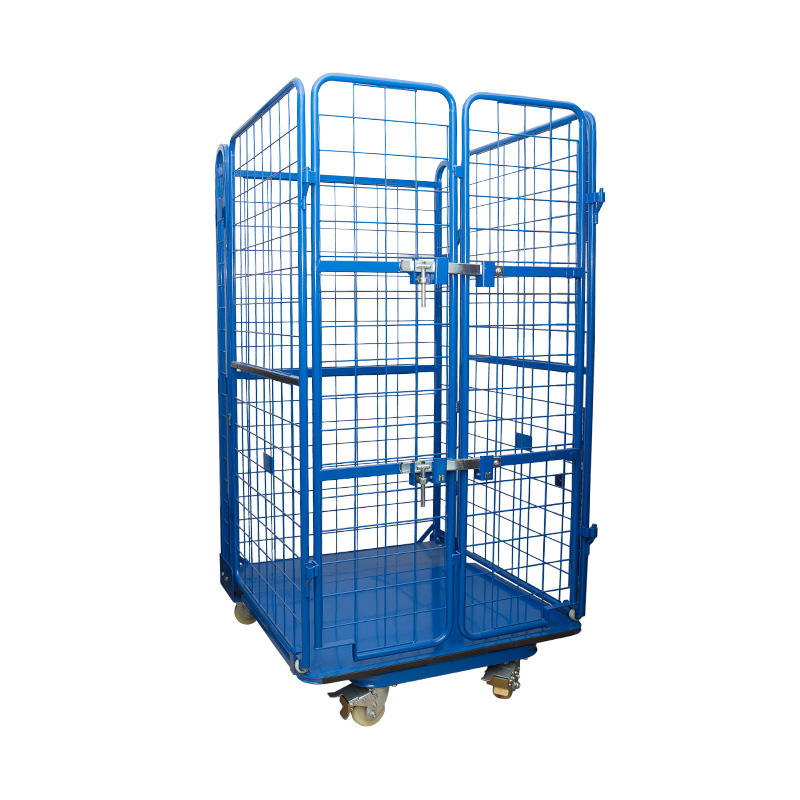
Roll Cages and Mobile Containers
Not every warehouse task revolves around pallets. Picking orders, moving goods between zones, and staging returns require mobile equipment that complements the racking system. Roll cages, mobile containers, and order picking trolleys are essential tools for optimizing workflows.
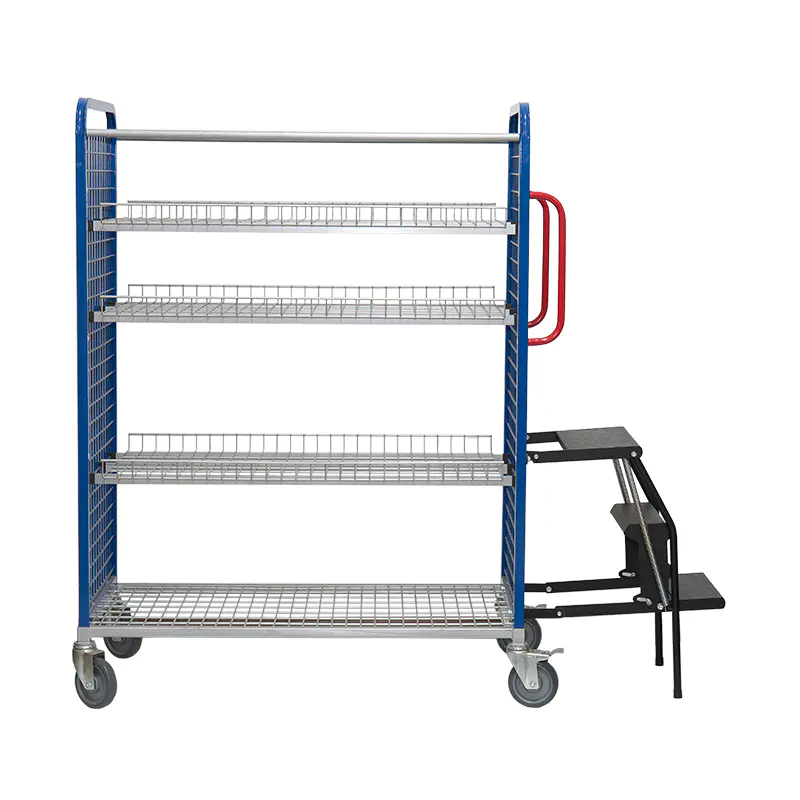 Multi-Tier Wire Mesh Order Picking Trolley with Adjustable Shelves Featuring adjustable shelves and a sturdy wire mesh design, this trolley improves picking accuracy and mobility. Its 360-degree swivel casters allow smooth navigation through aisles, reducing travel time between pick zones. View Product →
 Roll cages with a U-base or Z-base design are particularly useful for retail replenishment, allowing staff to load multiple orders and maneuver them through narrow aisles. A well-designed U-base roll cage can increase warehouse floor space efficiency by up to 25% in some configurations. By integrating these mobile units alongside static racking, warehouses can reduce the distance workers travel between pick zones and improve overall throughput.
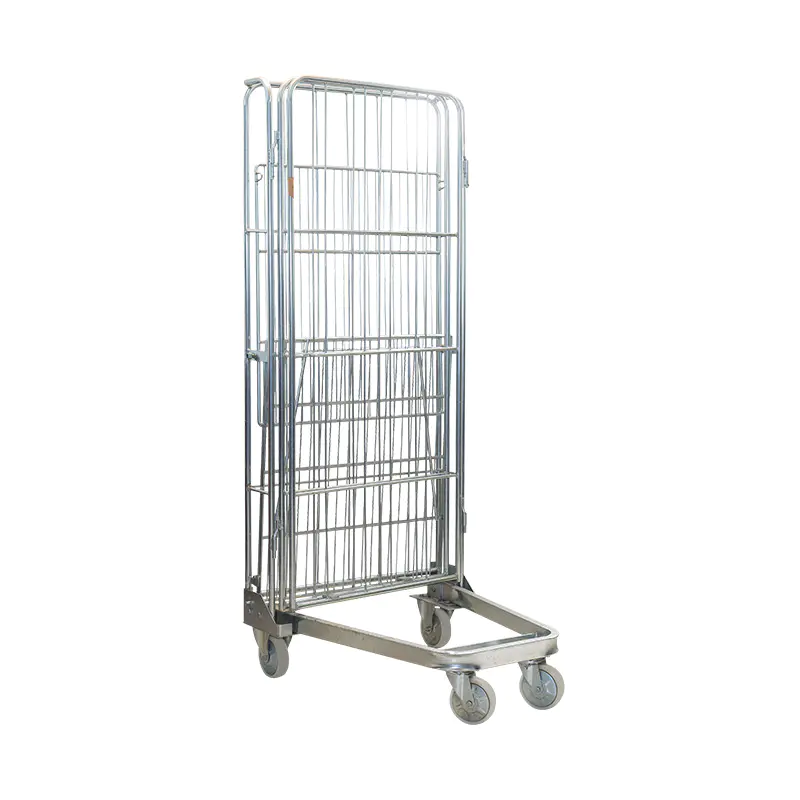 U-Base Rolling Container Cage for Streamlined Retail Replenishment With a stable U-base and foldable wire shelves, this rolling cage simplifies order staging and narrow-aisle maneuverability. Its swivel casters enhance flexibility, potentially increasing floor space efficiency by up to 25% in certain setups. View Product →
 How to Choose the Right Racking System
Choosing the right system requires a structured comparison. The table below summarizes the key characteristics of the main racking types.
| System | Access Level | Storage Density | Best For |
|---|---|---|---|
| Selective | High | Medium | High SKU count, frequent picking |
| Double Deep | Medium | Medium-High | Medium turnover, FIFO not required |
| Drive-In / Drive-Through | Low | Very High | Bulk storage, single SKU per bay |
| Push-Back | Medium | High | Multiple pallets per SKU |
| Pallet Flow | Medium | High | FIFO, high turnover products |
| Cantilever | High | Low | Long, bulky loads |
| Carton Flow | High | Medium | Case picking, high-volume split case |
Beyond the table, several practical factors influence the final decision:
- Available floor space and ceiling height determine whether tall, narrow systems are feasible.
- Forklift fleet compatibility affects aisle width requirements and racking height limits.
- Pallet condition and weight capacity influence beam selection and safety margins.
- Order picking strategy, whether full pallet, full case, or split case, determines the need for dynamic systems.
- Safety and seismic requirements may dictate structural racking over roll-formed racking in certain regions.
Frequently Asked Questions
Q1: What is the most common type of warehouse racking?
Selective pallet racking is the most widely used type because it provides immediate access to every pallet and can be easily adjusted to match different product sizes and storage requirements.
Q2: What is the difference between drive-in and drive-through racking?
Drive-in racking uses a single aisle and follows LIFO, while drive-through racking has loading at one end and unloading at the other, allowing FIFO. Drive-through offers better stock rotation but requires more space.
Q3: How do I choose between static and dynamic racking?
Static racking suits operations needing frequent access to many SKUs, while dynamic racking such as drive-in, push-back, or pallet flow delivers higher density for fewer SKUs. Match the system to your inventory profile and picking method.
Q4: Are roll cages considered racking systems?
No, roll cages are mobile storage and transportation equipment. They complement racking systems by improving order picking and goods movement, rather than providing static pallet storage.
No racking system works in isolation. The best warehouse combines static racking for structured storage, dynamic systems for high-density product handling, and mobile equipment for picking and transfer. Start by auditing your SKU count, pallet dimensions, and turnover rates. Then compare the density, access, and safety trade-offs of each system. By matching the racking design to your operational reality, you can achieve measurable improvements in space utilization, throughput, and worker safety.
関連商品
-
製品仕様: この倉庫ワイヤーメッシュ多層オーダーピッキングトロリーは、安定性、耐久性、柔軟性を確保するためにシャーシとサイドパネル構造を採用しています。シャーシは角型チューブフレームで作られており、しっかりとしたサポ...
詳細を見る -
折りたたみ式パレット ケージは工場物流における重要なツールです。これらは輸送、流通、保管、流通において重要な役割を果たしており、さまざまな物流コンテナやワークステーション機器と簡単に連携できます。清掃プロセスが簡単で、回転プロセスが効...
詳細を見る -
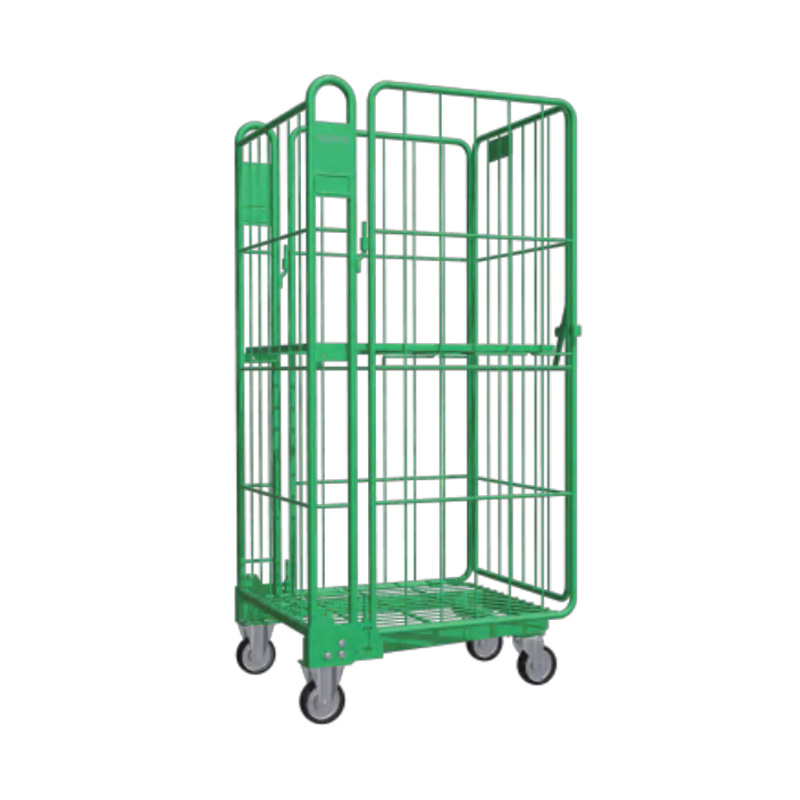
製品仕様: シャーシは角チューブフレームで、側面に折り畳める底板金板トレイと補強金属フラットバー付きの底棚を備え、耐荷重を確保しています。コンテナ構造は50×50のワイヤーメッシュを備えた円形チューブフレームで作られ...
詳細を見る -
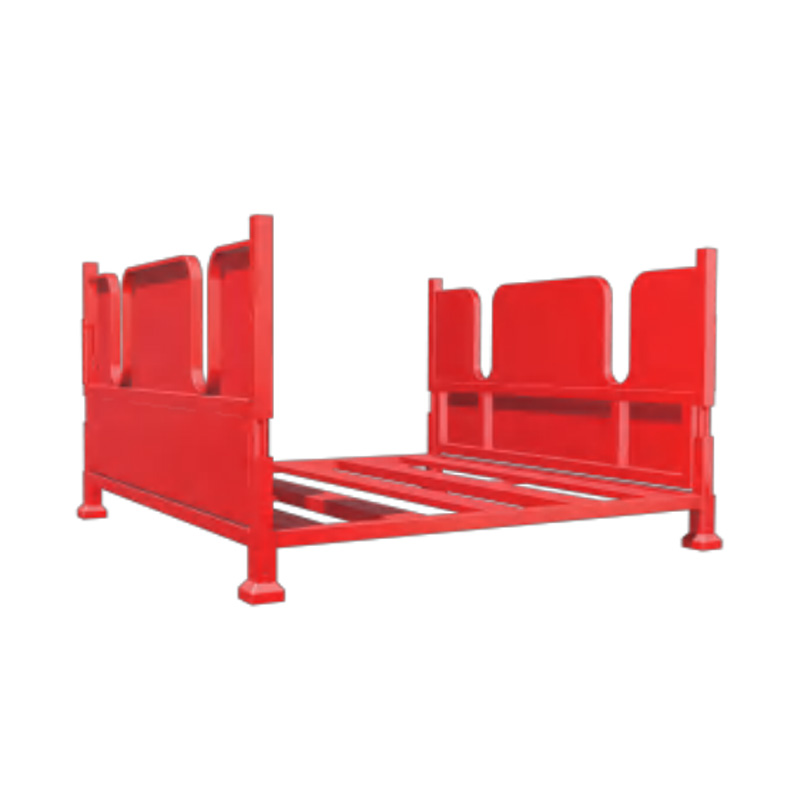
スタッキング ラック、Qiaogu ラックまたはスタッキング ラックとも呼ばれます パレットから派生した輸送・保管装置であり、貨物の混載、商品の保管、商品の流通などを行う多機能装置の一つで、フォークリフトと併用する必...
詳細を見る

情報
-
中国蘇州市翔城区渭桞鎮渭西村、濰西路138号ビルB5。
-
電話番号:
+86-13862140414
+86-13951110334 -
Phone: +86-512-65905480
